Artificial Intelligence Applications in Dental Diagnosis and Treatment Planning: A Review
Keywords:
- Artificial Intelligence; Dental Diagnosis; Treatment Planning; Machine Learning; Deep Learning; Dental Imaging
Abstract
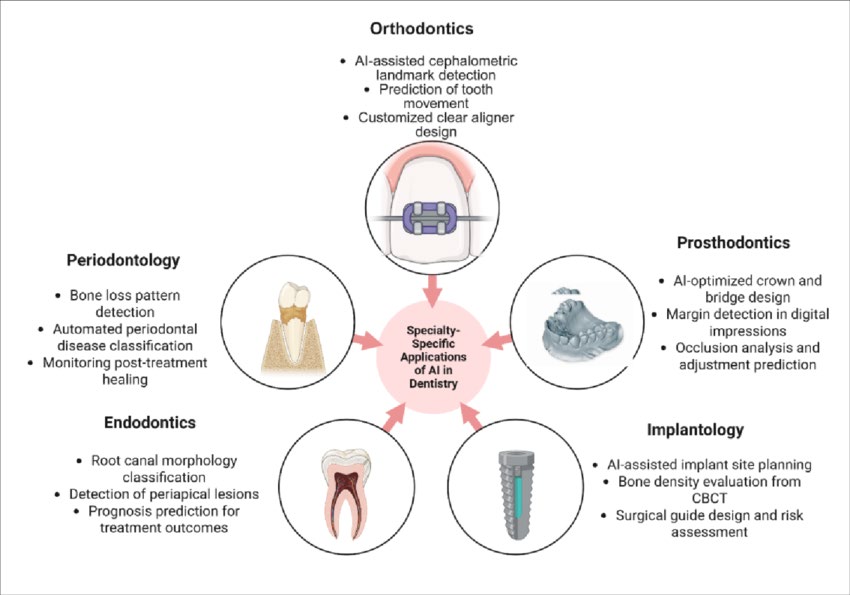
Artificial intelligence (AI) technology represents one of the promising technologies of the future in dentistry with a range of practical applications for diagnosis, treatment planning and decision making in clinical cases. The current literature review covers human-based AI applications in the management of dental caries, periodontal disease, endodontic diseases, oral lesions, orthodontics, prosthodontics, implant dentistry and oral and maxillofacial radiology. Machine learning, deep learning and convolutional neural networks use dental radiographs, cone-beam computed tomography scans, intraoral images, cephalometric images and clinical records for the purpose of detecting the diseases, interpreting the images, evaluating anatomy and planning the treatment. There is evidence that AI can improve the efficiency and consistency of diagnoses and make personalization of dental care possible, especially when it comes to image-based application. However, there are limitations in form of small sample sizes, lack of external validation, inconsistencies in the use of imaging techniques, bias in algorithms, lack of explainability of results and data protection issues. Therefore, AI should serve more as the aid for dentist in decision-making rather than substitute for him/her.