Laser Technology in Dentistry: Clinical Applications and Emerging Trends
Keywords:
- Laser dentistry; Diode laser; Clinical effectiveness; Periodontal therapy; Soft-tissue surgery; Dental technology
Abstract
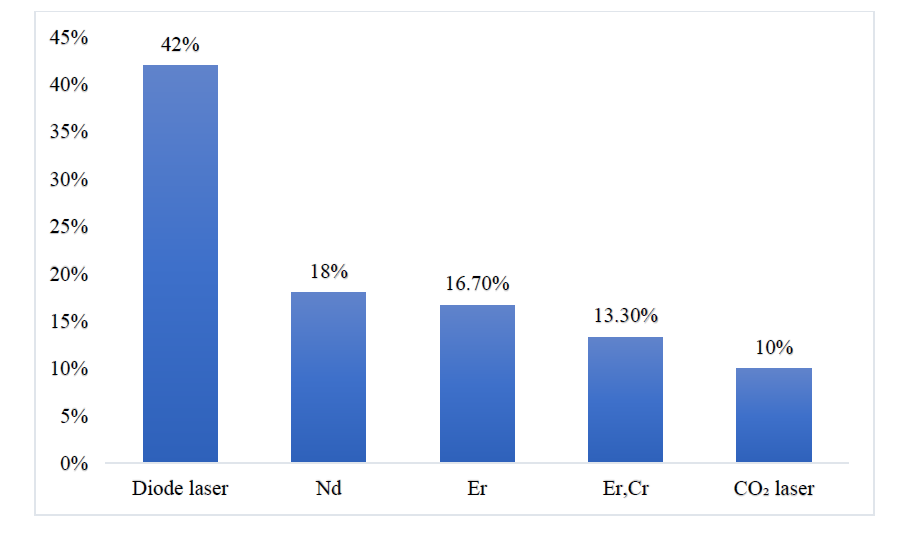
Laser technology has emerged as an important advancement in modern dentistry, offering greater precision, improved tissue management, and minimally invasive alternatives across several clinical procedures. The present study evaluated the clinical applications, perceived effectiveness, and factors influencing the adoption of laser technology among 150 dental practitioners using a quantitative cross-sectional analytical design. Data were collected through a structured questionnaire and analyzed using descriptive statistics, Chi-square test, independent-samples t-test, one-way ANOVA, and multiple regression analysis. Diode lasers were the most commonly utilized system (42.0%), while periodontal procedures (26.0%) and soft-tissue surgery (24.0%) were the leading clinical applications. Bleeding control showed the highest perceived outcome score (4.34 ± 0.58). Professional specialization was significantly associated with regular laser use (p = .027), while regular users reported significantly greater clinical effectiveness than non-regular users (p < .001). Clinical effectiveness also differed significantly across laser types (p = .029). Regression analysis identified frequency of laser use, formal training, and perceived ease of use as significant predictors of clinical effectiveness, with the model explaining 38.6% of the variance. The study concludes that laser technology represents a valuable adjunct in contemporary dentistry, although its effective integration depends substantially on appropriate training, regular clinical exposure, and procedure-specific selection of laser systems.