EVALI (E-Cigarette or Vaping Use-Associated Lung Injury): Pathogenesis, Etiology, AI Models, Epidemiology, 3D Bioprinting, Advanced Therapeutics, Tissue Engineering, Airways, Peyronie's and Paget's Disease
Keywords:
- E-cigarette or Vaping Use-Associated Lung Injury (EVALI); Artificial Intelligence; Tissue Engineering; 3D Bioprinting; Precision Medicine; Lung Organoids
Abstract
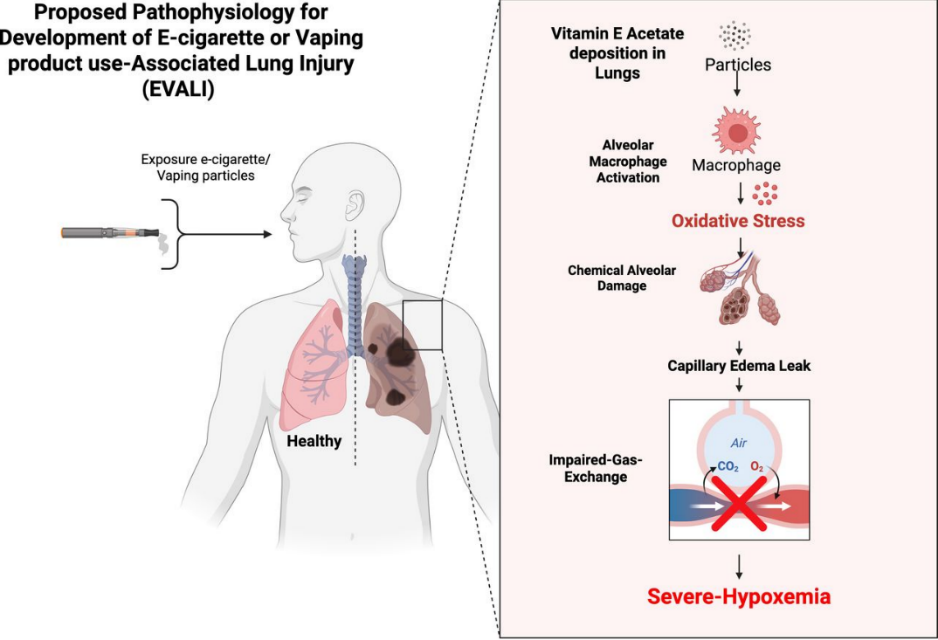
E-cigarette or Vaping Use-Associated Lung Injury (EVALI) is a new type of lung disease linked to the massivevaping and electronic cigarette use. The condition is caused by the inhalation of toxic components of the aerosolsuch as nicotine, tetrahydrocannabinol (THC), vitamin E acetate, flavours, and other toxic chemicals, which causeoxidative stress, immune dysregulation and acute pulmonary injury. This review provides an overview of thecurrent knowledge of the pathogenesis, etiology, epidemiology, clinical presentation and diagnosis, imaging, andtreatment of EVALI. It also identifies recent developments of artificial intelligence (AI), machine learning, deeplearning, radiomics, and predictive analytics to aid in diagnosis and clinical decision-making. Moreover, a briefaccount of new emerging regenerative strategies like lung organoids, tissue engineering, three-dimensional (3D)bioprinting, biomaterials, and stem-cell–based therapies in relation to their use in pulmonary repair andtranslational medicine is provided. Issues of current challenges and clinical translation, as well as future researchpriorities, are also discussed. In general, the combination of AI, precision medicine and regenerative technologiesholds potential for enhancing EVALI diagnosis, treatment and management in the long term, although furtherclinical validation is needed before it can be widely adopted..