Exercise-Therapy Dose-Response for Chronic Low Back Pain: A Multi-Arm Randomized Clinical Trial
DOI:
https://doi.org/10.64474/3107-6343.Vol2.Issue1.6Keywords:
- Chronic low back pain, Exercise therapy, Dose–response, clinical study, Pain sensitivity, ODI, Muscle strength.
Abstract
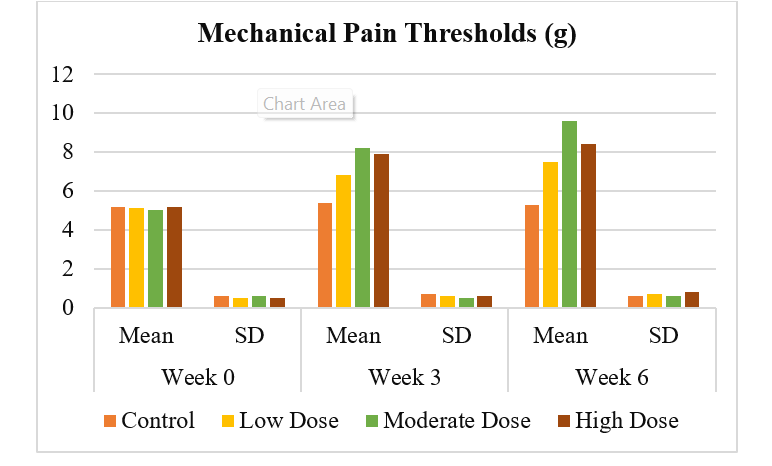
Chronic low back pain refers to a chronic musculoskeletal disorder with related pain, impairment of functions and mobility, against which exercise therapy is a non-pharmacological option that is highly recommended. Nevertheless, the dose response relationship of the exercise therapy still has poorly defined ones. The current research examines the dose dependency of the exercise therapy on the basis of a randomized, controlled, multi-arm clinical experimental design. The male human of adult age was taken to the induced chronic low back pain and categorized into four groups, control, low dose, moderate dose, and high dose exercise therapy. The intervention of exercise was applied over six weeks and measured in the form of mechanical pain sensitivity, ODI performance and muscle strength. The findings proved that exercise-treated groups had been improved over the control group but moderate-dose exercise group showed the largest increases in pain threshold, ODI and Dynamometer. Exercise administered at a high dose yielded improvements but had not caused proportional improvements. The results point to the existence of a dose-response relationship, which implies moderate-intensity exercises are the most effective in terms of therapeutic effect in chronic low back pain. The research provides a substantial evidence of clinical value to accumulate exercise dose-optimization and offer a basis to conduct future translational and rehabilitation research.