Implementation and Outcomes of Stratified Care Pathways in Community Physiotherapy Services
DOI:
https://doi.org/10.64474/3107-6343.Vol2.Issue1.1Keywords:
- Stratified Care Pathways, Community Physiotherapy Services, Musculoskeletal Dysfunction, Human participants, Rehabilitation Outcomes.
Abstract
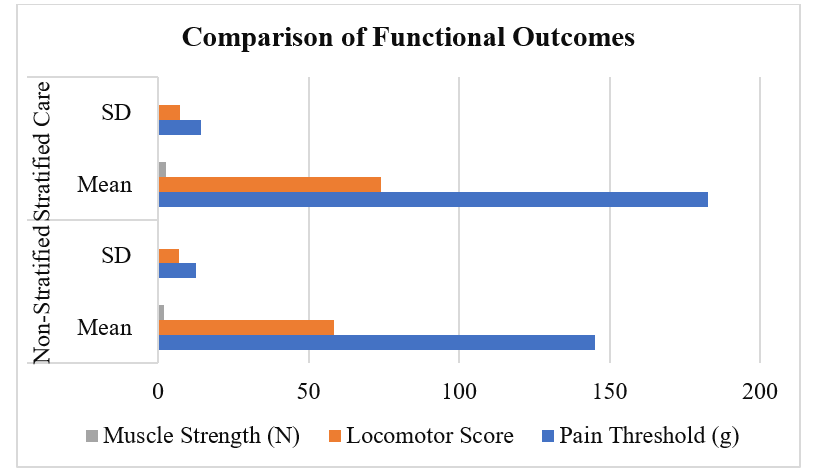
Stratified care pathways can be considered an effective way to maximize physiotherapy based on the severity of musculoskeletal dysfunction by matching the intensity of treatment; but there is little clinical evidence of their efficacy. This paper assesses the processes and results of the stratified physiotherapy care pathways through a controlled randomized clinical study conducted in a community physiotherapy setting. This was a randomized clinical study conducted among adult human participants (n = 48) with clinically diagnosed musculoskeletal dysfunction, who were allocated to either non-stratified care or stratified physiotherapy pathways of low, moderate, and high intensity according to baseline functional severity. The effect on pain sensitivity, locomotor performance, and muscle strength was measured in six weeks of intervention. The statistical analysis showed that participants undergoing stratified physiotherapy treatment had significantly higher pain provocation threshold, better locomotor activity and stronger muscles than those undergoing non-stratified care (p < 0.001). Also, an intensity-related enhancement was realized, where high-intensity physiotherapy created the most significant functional recovery. These results are solid clinical indicators of stratified physiotherapy care pathways and strengthen their translational application to enhancing functional outcomes of communal physiotherapy services.