Evaluation of Herbal Irrigants for Endodontic Disinfection: Efficacy and Cytotoxicity Comparisons
DOI:
https://doi.org/10.64474/3107-6343.Vol1.Issue3.3Keywords:
- Herbal irrigants, Endodontic disinfection, Cytotoxicity, Sodium hypochlorite, Neem extract, Enterococcus faecalis.
Abstract
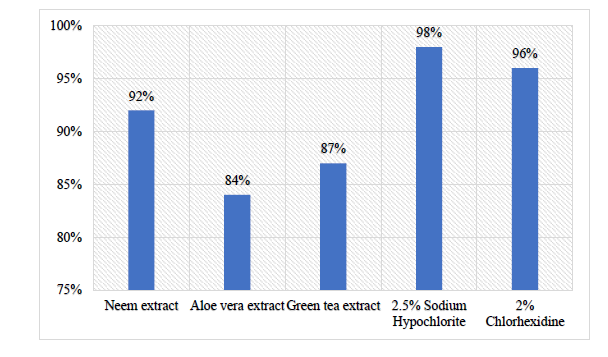
Endodontic disinfection is most effective with irrigants that are both biocompatible and highly antibacterial. In contrast to traditional agents, 2.5% Sodium Hypochlorite and 2% Chlorhexidine, this study compared the effectiveness and cytotoxicity of three herbal irrigants: neem, aloe vera, and green tea extracts. To measure cytotoxicity, MTT tests were performed on L929 fibroblasts, and CFU reduction of Enterococcus faecalis was used to measure antibacterial activity, both in an in-vitro manner. Sodium hypochlorite had the highest cytotoxicity and the maximum antibacterial decrease, according to the results. Among the herbal irrigants, neem extract had the most potent antibacterial action, while aloe vera was the most biocompatible. Both the antibacterial and cytotoxic outcomes showed substantial intergroup differences, as validated by ANOVA and Tukey post hoc tests. The results of this study indicate that herbal irrigants may be a safer option than traditional chemical solutions, and they call for additional clinical testing to confirm this.